Why an Independent Property Inventory Matters

A tenancy can start with smiles, fresh keys and good intentions, then end months later with a disagreement over a stained carpet, a missing appliance manual or a cracked tile no one can date. Without a clear record of the property at the start, everyone is left relying on memory. Memory is rarely enough.
An independent property inventory gives a rented home a factual starting point. It records the condition, contents and key details before a tenant moves in, then gives both sides something solid to refer to at check-out. For landlords, tenants and letting agents, that record can prevent friction, support fair decisions and reduce the chance of a deposit dispute.
A good inventory is not just a list of furniture. It is a careful, room-by-room record of the property, backed by dated photographs and clear written notes. When it is prepared independently, it carries more weight because it has not been written by someone with a direct financial interest in the outcome.

An independent property inventory sets the baseline for the whole tenancy
The main purpose of an inventory is simple. It answers one question:
What was the property like at the start of the tenancy?
That baseline matters because rental homes change through normal use. Paintwork gets lightly marked, carpets flatten, seals around baths wear, and appliances age. Some of this is fair wear and tear. Some damage may go beyond normal use. The inventory helps separate the two.
For example, “bedroom carpet in good condition” is useful, but not enough. A stronger entry would say:
Bedroom carpet is beige, clean overall, with one faint 4 cm mark near the door and light flattening in the walkway.
That level of detail protects everyone. If the same mark appears at check-out, it is not treated as new damage. If a large ink stain appears in another area, there is a fair point of comparison.
An inventory also reduces the risk of vague claims. A landlord should not have to guess whether a blind was damaged before move-in. A tenant should not have to argue against an unclear statement such as “property not clean enough” without any evidence of how it looked at the start.
When written well, the inventory becomes a neutral timeline marker. It shows the condition of the property on a specific day, usually just before keys are handed over.
Independence makes the record more reliable
An inventory can be written by a landlord, agent, tenant or third-party clerk. The issue is not only who writes it, but how impartial the record appears if a disagreement later arises.
An independent inventory clerk has no personal stake in keeping deposit money or avoiding repair costs. Their role is to observe, record and report. That distance can make the document more credible.
Independence matters most when there is a dispute. If the landlord has prepared a short inventory with no photos, a tenant may question whether it favours the landlord. If a tenant has taken their own photos, a landlord may question whether those photos show the full condition of the property. An independent report reduces this tension by giving both sides a common reference point.
A proper independent inventory should be:
Detailed
It should describe walls, floors, ceilings, doors, windows, fixtures, fittings, furnishings and appliances.
Dated
The timing matters. The report should make clear when the inspection took place.
Photographic
Photos should support the written notes, not replace them.
Consistent
Each room should be inspected in a similar way, so the report does not miss important areas.
Plainly written
The best reports use clear wording rather than vague terms.
An independent clerk should not overstate or downplay issues. If a wall has scuffs, it should say so. If a bathroom is clean, it should say so. The value sits in accuracy, not in making the property look better or worse than it is.
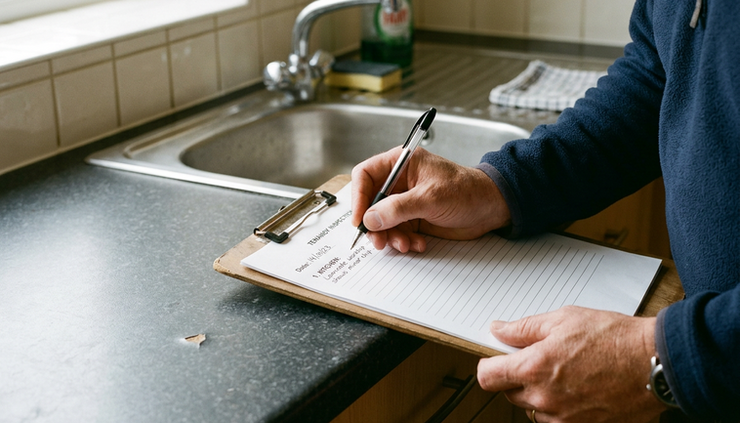
A proper inventory covers more than contents
Some people hear “inventory” and think of movable items, such as sofas, beds, tables and kitchen equipment. Contents are part of it, but a rental inventory should go further.
A full report usually includes the condition of the property itself, often called a schedule of condition. That means it records fixed features as well as items that can be removed.
Common areas covered include:
Area | What should be recorded |
Walls, ceilings and woodwork | Marks, cracks, chips, stains, nail holes and paint condition |
Flooring | Wear, burns, stains, scratches, loose edges and cleanliness |
Windows and doors | Locks, handles, glazing, blinds, curtains and signs of damage |
Kitchen | Units, worktops, appliances, extractor, sink, taps and flooring |
Bathroom | Sanitaryware, seals, tiles, taps, mirrors, ventilation and cleanliness |
Furniture | Condition, marks, loose parts, missing pieces and upholstery |
Safety items | Smoke alarms, carbon monoxide alarms where present, and relevant notes |
Utilities | Meter readings, heating controls and sometimes stopcock location |
Keys | Number and type of keys, fobs, permits or access devices |
This detail is useful even in an unfurnished property. In fact, unfurnished homes still need strong reports because fixed elements can lead to costly disagreements. Carpets, flooring, doors, worktops and bathroom fittings often carry more value than basic furniture.
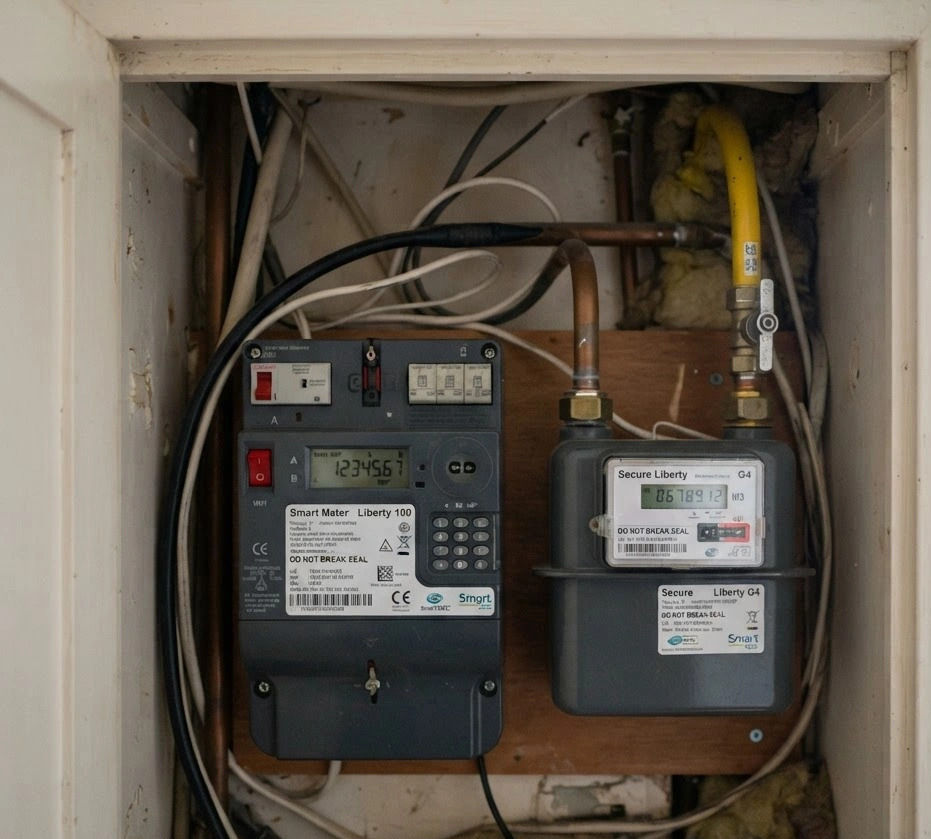
Meter readings are another practical benefit. A recorded reading at the start can help avoid confusion over energy bills. Key records also matter. If a tenant receives two front door keys, one back door key and a parking fob, the check-out can confirm whether everything has been returned.
Cleanliness should be recorded throughout the report. “Professionally cleaned” can be difficult to prove unless there is evidence, so the report should describe what can be seen. For example, “oven clean with light staining to the rear panel” is clearer than a broad comment.
It helps protect deposits fairly
In England and Wales, most assured shorthold tenancy deposits must be protected in a government-approved tenancy deposit scheme. Scotland and Northern Ireland have their own rules and schemes. While the exact process varies, one point stays the same: if a deduction is challenged, evidence matters.
A deposit is not a general maintenance fund. It should not be used to make a property better than it was at the start. At the same time, tenants are normally expected to return the property in line with the tenancy agreement, allowing for fair wear and tear.
An independent inventory helps with that balance.
If a landlord claims for damage, they need to show:
The item or area was in better condition at the start
The issue appeared during the tenancy
The proposed deduction is reasonable
Wear and tear has been considered
If a tenant challenges the claim, they need clear evidence too. A strong inventory helps both sides test the claim against the facts.
For example, say a dining table has several scratches at check-out. The question is not simply whether scratches exist. The fair questions are:
Were there scratches at check-in?
How many were noted?
Were they light, moderate or heavy?
Are the new scratches beyond normal use?
How old was the table?
What would a fair contribution be, if any?
The inventory cannot answer every question on its own, but it gives the discussion a firm base. Without it, the argument becomes much harder to resolve.
It reduces stress at check-out
Check-out can be tense. The tenant is trying to move, clean, return keys and manage final bills. The landlord wants the property ready for the next tenancy. If the check-in report was poor, this is when problems surface.
A strong independent inventory makes check-out more structured. The clerk can compare the current condition against the start report, room by room. This changes the tone from opinion to comparison.
Instead of saying, “The bedroom is damaged,” the report can say:
“Check-in noted light scuffing to the wall behind the door. Check-out shows additional dark scuffs and two screw holes above the radiator.”
That kind of wording is useful because it identifies what changed. It also helps distinguish between cleaning, damage, missing items and maintenance issues.
Check-out reports often look at:
Changes to condition
Missing items
Cleaning differences
Garden condition, if included in the tenancy
Returned keys and access devices
Meter readings
Obvious maintenance concerns
The report should not make emotional judgements. It should not frame a tenant as careless or a landlord as unfair. Its job is to record differences. Decisions about costs come after that, based on evidence, age, quality, expected lifespan and fair wear and tear.
It encourages better behaviour from the start
A careful inventory sends a quiet but clear message: the property is being managed properly.
That helps set expectations. Tenants can see that the property condition has been recorded properly, including existing marks and defects. Landlords can show that they take the tenancy seriously and are not relying on guesswork. Agents have a clearer file if questions arise later.
This can lead to better communication during the tenancy. If a tenant notices a leak, broken fitting or appliance fault, they are more likely to report it when the paperwork already feels organised. If the landlord needs to arrange maintenance, the inventory gives useful background.
It also helps avoid blame for pre-existing issues. A loose handle noted at check-in should not become the tenant’s responsibility at check-out unless it worsened through misuse. A stained carpet recorded before move-in should not become a new cleaning claim. Clear records reduce resentment.
For landlords with several properties, independent inventories can also bring consistency. Each property is recorded using a similar method, which makes file keeping easier. For tenants, consistency can make the process feel fairer and less personal.
The best reports combine words and photographs
Photos are powerful, but they can mislead if used alone. A photograph might not show a faint stain, the scale of a scratch or the location of a defect. Written notes add context.
At the same time, words alone can feel open to interpretation. “Marked wall” could mean one small scuff or heavy staining. A photo helps anchor the description.
The strongest inventory uses both. The written report names the item, condition and location. The photo shows the evidence.
Good photographs should be:
Clear and in focus
Taken in good light where possible
Labelled or placed near the matching text
Wide enough to show location
Close enough to show detail when needed
There is a simple rule here. If a detail could affect a deposit decision later, it should be recorded clearly.
That means a single photo of each room is not enough. A general room shot is useful, but it will not show the chip in the bath enamel, the burn mark on the worktop or the cracked freezer drawer. The inventory needs both overview images and detail shots.
Tenants should still read the inventory carefully after receiving it. If something has been missed, they should raise it promptly in writing, with photos if needed. A fair process allows reasonable corrections or comments at the start, rather than leaving issues until the tenancy ends.

Independence is useful for landlords, tenants and agents
The value of an independent inventory is sometimes framed as landlord protection. That is only half the picture. A fair report protects tenants too.
For landlords, it supports legitimate claims and helps protect the value of the property. It also reduces the chance of long arguments based on unclear evidence.
For tenants, it records existing defects and helps prevent unfair deductions. It gives a clear reference if they are challenged about damage they did not cause.
For letting agents, it creates a more professional tenancy file. It also helps maintain trust between both sides, especially when the agent manages the property on behalf of an absent landlord.
The shared benefit is clarity. No one has to rely on a hurried walk-through, a few phone photos or a memory of what the property “probably” looked like.
A weak inventory can be almost as bad as no inventory
Not every inventory is useful. A rushed report can create false confidence, then fail when it is needed most.
Common weaknesses include:
Vague descriptions, such as “good condition” throughout
Too few photographs
No detail on cleanliness
Missing meter readings
No key schedule
No record of existing damage
Poor room-by-room structure
Photos with no clear link to the written notes
No tenant comments or acknowledgement process
A weak inventory can make disputes harder because it suggests a record exists, but does not provide enough detail to settle the issue. If the kitchen worktop is described only as “used condition”, that phrase may not help anyone decide whether a later burn mark is new.
A good independent clerk takes time. They open cupboards, inspect flooring, note marks, check supplied items and record awkward details. The result may feel long, but that length has a purpose. It gives the report enough depth to be useful months or years later.
The small cost can prevent a much larger problem
An independent inventory is one of those services people appreciate most when something goes wrong. If the tenancy ends smoothly, it may simply sit in the file. If a dispute arises, it can become the most important document in the process.
The cost of a proper report is usually modest when compared with the possible cost of replacing flooring, redecorating, cleaning heavily used areas or arguing over deductions. More than that, it saves time and stress. A clear report can shorten difficult conversations because the evidence is already there.
For tenants, it can protect hundreds or even thousands of pounds in deposit money. For landlords, it can support fair recovery where damage has gone beyond normal use. For agents, it reduces avoidable friction and keeps the tenancy process cleaner.
The best time to prepare an inventory is before the tenancy begins, when the property is empty or ready for occupation. Once belongings are moved in, it becomes harder to see walls, flooring, fixtures and fittings clearly. Once the tenancy has ended, it is too late to recreate the start point properly.
A good independent property inventory does not remove every possible disagreement. People may still differ over wear and tear, cleaning standards or fair costs. But it changes the conversation. It replaces guesswork with evidence, and emotion with a record both sides can inspect.
That is why it matters. A tenancy is smoother when everyone knows where they stand from day one.